
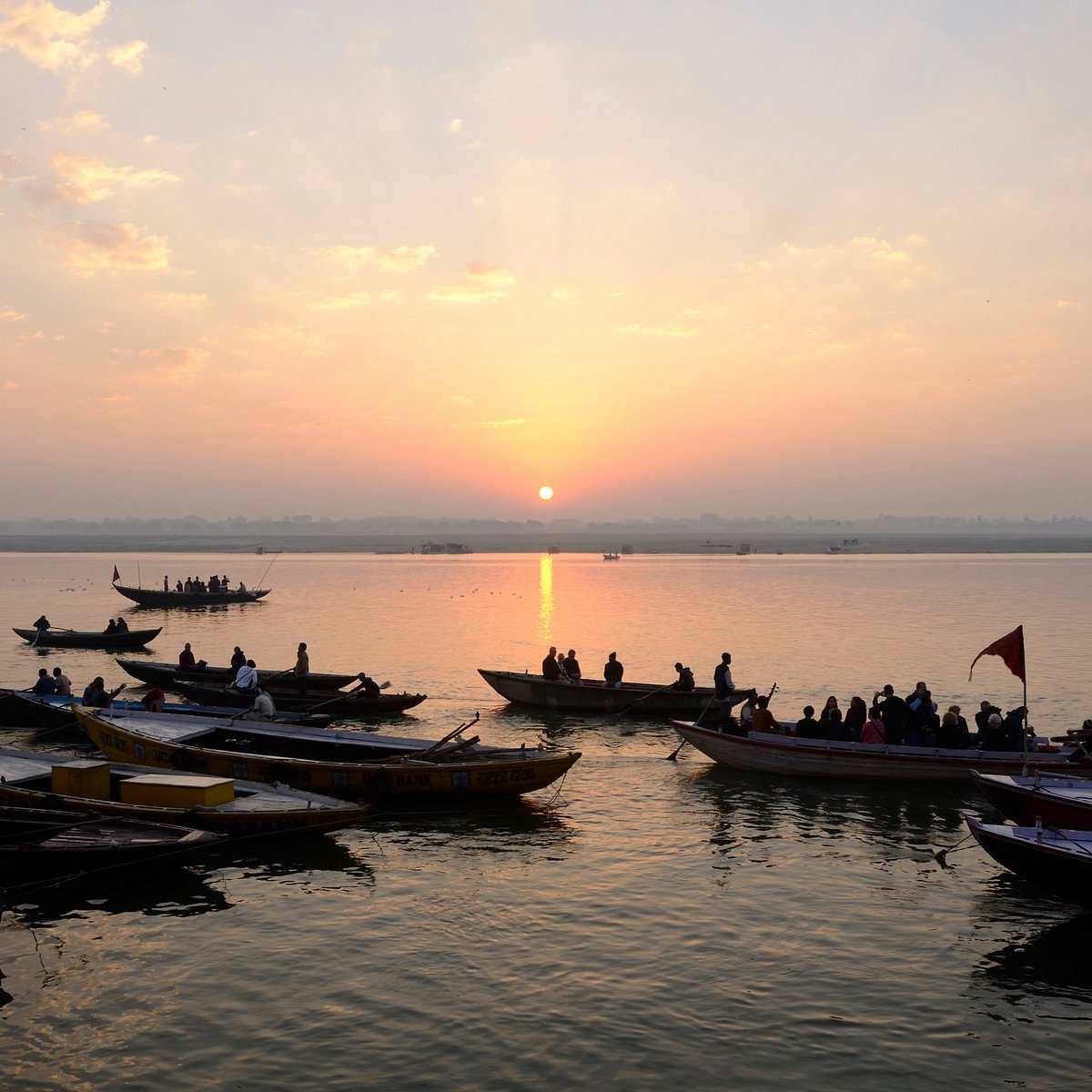
Watching the sunrise over the Ganges in Varanasi is one of the most peaceful experiences in India. But many travellers imagine quiet golden light and instead find heavy footfall, loud boat engines, and crowded steps.
The truth is simple: a crowd-free sunrise in Varanasi is possible — but only with smart planning.
This guide will help you experience the ghats in their calmest form.

Why Sunrise Is Special in Varanasi
Before planning logistics, it helps to understand what happens at dawn.
Between 4:45 AM and 6:30 AM:
- Priests begin early rituals
- Devotees gather for holy dips
- Boatmen prepare for morning rides
- The sky shifts from deep blue to soft orange
Unlike evening aarti, sunrise is more spiritual than ceremonial. The atmosphere feels natural and reflective — if you avoid peak clusters.
Step 1: Choose the Right Ghat (Location Matters Most)
Not all ghats offer the same crowd experience.
1️⃣ Assi Ghat
Best for a relaxed sunrise.
- Wider space
- Slightly less chaotic than central ghats
- Ideal for first-time visitors
2️⃣ Dashashwamedh Ghat
Most popular and most crowded.
- Central location
- Strong spiritual activity
- High tourist concentration
3️⃣ Kedar Ghat
Balanced option.
- Less commercial
- More local atmosphere
- Good photography angles
If your goal is peaceful sunrise photography or quiet reflection, start from Assi Ghat or slightly south of it.
Step 2: Reach Before 5:00 AM
Timing is everything.
Most travellers arrive around 6:00 AM, which is already late.
To avoid heavy crowd flow:
- Leave your hotel by 4:30 AM
- Reach the ghat before 5:00 AM
- Settle down before boat tours begin
The first 30–40 minutes are the calmest. The city slowly wakes up, and the river feels still.
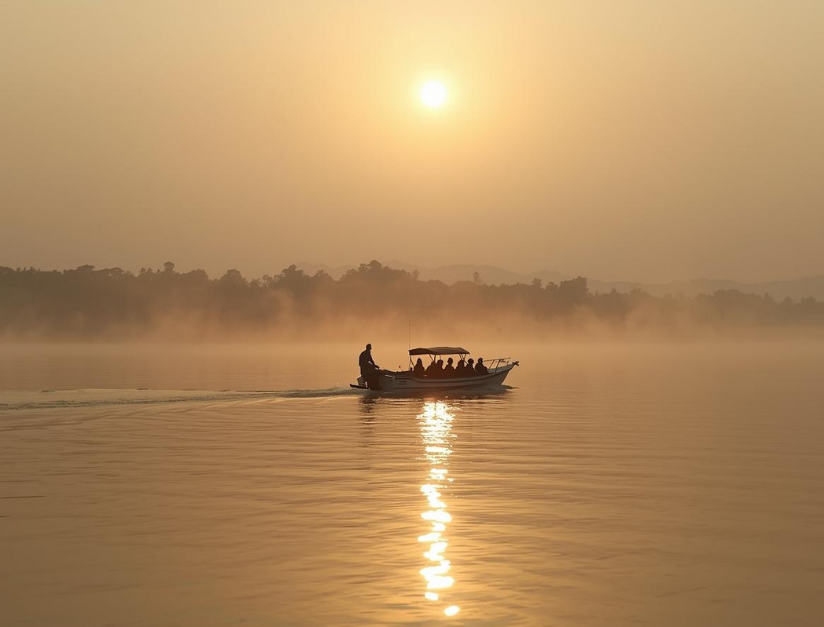
Step 3: Consider a Sunrise Boat Ride (But Choose Carefully)
A boat ride gives a panoramic view of multiple ghats during sunrise. However:
- Avoid large shared boats
- Choose smaller row boats instead of loud motorboats
- Negotiate calmly and clearly before boarding
The best time to start the ride is just before sunrise, not after the sun has already risen.
Boats drifting quietly in the early light create a much more serene experience compared to later hours when traffic increases.

Step 4: Stay in the Right Area
Your hotel location affects your morning experience.
If possible:
- Stay near Assi Ghat for easier early access
- Choose accommodations inside old city lanes if you prefer walking access
- Avoid staying far away where you need long transport arrangements at dawn
Less travel distance = more peaceful sunrise.
Step 5: Avoid Festival & Peak Tourist Periods
Certain months bring heavier footfall.
Peak crowd periods include:
- Major religious festivals
- Long weekends
- Winter peak season (November–February)
If your goal is a calm sunrise, consider:
- Late monsoon months
- Early summer mornings
- Mid-week visits instead of weekends
Crowd difference can be significant depending on timing.
Step 6: Dress and Prepare for the Atmosphere
Early mornings by the river can feel cooler, especially in winter.
Carry:
- A light shawl or jacket
- Comfortable footwear (ghat steps can be uneven)
- Minimal luggage
Avoid carrying too much equipment if you want easy movement between steps.

Step 7: Respect the Spiritual Environment
Varanasi is not just a scenic riverfront — it is one of the oldest living spiritual cities in the world.
During sunrise you will see:
- Devotees offering prayers
- Priests conducting rituals
- Locals bathing in the river
Maintain distance while photographing. Avoid intrusive behavior. A peaceful sunrise also depends on how respectfully visitors behave.
Step 8: Stay After the Main Crowd Leaves
Most tourists leave by 7:30–8:00 AM.
If you remain:
- The ghats become quieter again
- Tea stalls open
- Morning conversations begin
- Local rhythm replaces tourist movement
Sometimes, the post-sunrise calm feels even more authentic than the actual sunrise moment.

Ideal Sunrise Planning Summary
For a crowd-free experience:
- Choose Assi or southern ghats
- Arrive before 5:00 AM
- Avoid weekends and festival days
- Consider a small row boat
- Stay nearby for easy access
- Remain after peak movement ends
Simple planning makes a huge difference.
Final Thoughts
A peaceful sunrise at Varanasi ghats is not about escaping people completely — this is a living, breathing spiritual city. Instead, it is about arriving early, choosing the right location, and aligning your timing with the natural rhythm of the river.
When planned thoughtfully, the experience feels deeply personal. The sound of temple bells, soft chants, birds crossing the orange sky, and the slow movement of the Ganges create a memory that stays long after you leave.
And in that quiet golden light, Varanasi does not feel crowded at all — it feels timeless.
FAQS
Arrive before 5:00 AM. The calmest period is usually between 4:45 AM and 5:45 AM before larger tourist groups arrive.
Assi Ghat is generally more spacious and less chaotic compared to central ghats. It is ideal for travellers seeking a relaxed atmosphere.
No, it is optional. A small row boat offers a wider panoramic view of multiple ghats, but sitting peacefully on the steps can be equally meaningful.
Dashashwamedh Ghat tends to attract more visitors because of its central location and religious importance.
Late monsoon and early summer weekdays usually have fewer tourists compared to peak winter and festival periods.
Yes, early mornings are generally safe, especially near major ghats. However, travellers should stay alert, avoid isolated lanes and keep belongings secure.
Staying until around 7:30–8:00 AM allows you to see the transition from spiritual rituals to daily local life, which adds depth to the experience.
Wear comfortable clothing, modest attire and carry a light jacket during winter months. The stone steps can be uneven, so proper footwear is recommended.






4 Responses
I am truly thankful to the owner of this web site who has shared this fantastic piece of writing at at this place.
Thank you so much, Jackson! We truly appreciate your kind words and support. It means a lot to know that you found the article helpful and enjoyable.
I do not even understand how I ended up here, but I assumed this publish used to be great
Thank you for visiting our website, June. We’re glad you found your way here! We hope you enjoyed the article and found it helpful. We’ll continue sharing useful travel insights to make your experience even better. Your feedback is always welcome!