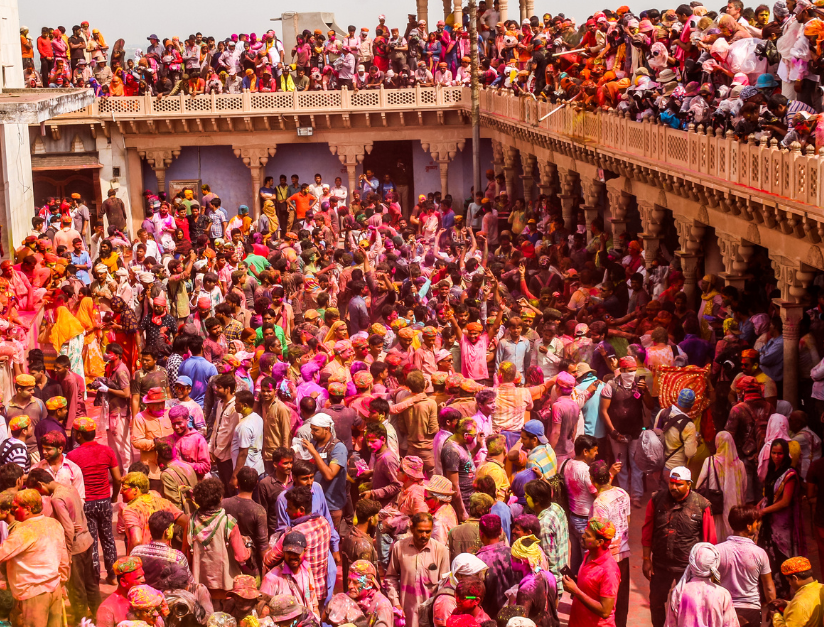
Holi in Mathura and Vrindavan is unlike anywhere else in India. Here, Holi is not limited to one day of colors—it unfolds gradually over several weeks, with different temples and towns celebrating in their own unique ways. This extended festive period attracts devotees, photographers, and travelers from across the world who want to experience Holi in its most traditional and devotional form.
This guide explains why Holi lasts for weeks in Mathura–Vrindavan, the key events you shouldn’t miss, the best time to visit, and practical tips for tourists.
Why Holi Celebrations Last for Weeks in Mathura–Vrindavan
Mathura and Vrindavan are deeply associated with the life of Lord Krishna. Holi here is linked to Krishna’s childhood stories, playful interactions with Radha and the gopis, and temple traditions that follow the Hindu lunar calendar.
Instead of one single celebration:
- Different temples celebrate Holi on different auspicious days
- Events are spread across Vrindavan, Mathura, Barsana, and Nandgaon
- Each celebration highlights a distinct cultural or devotional tradition
This is why people often describe Holi here as a long festive season, not a one-day event.
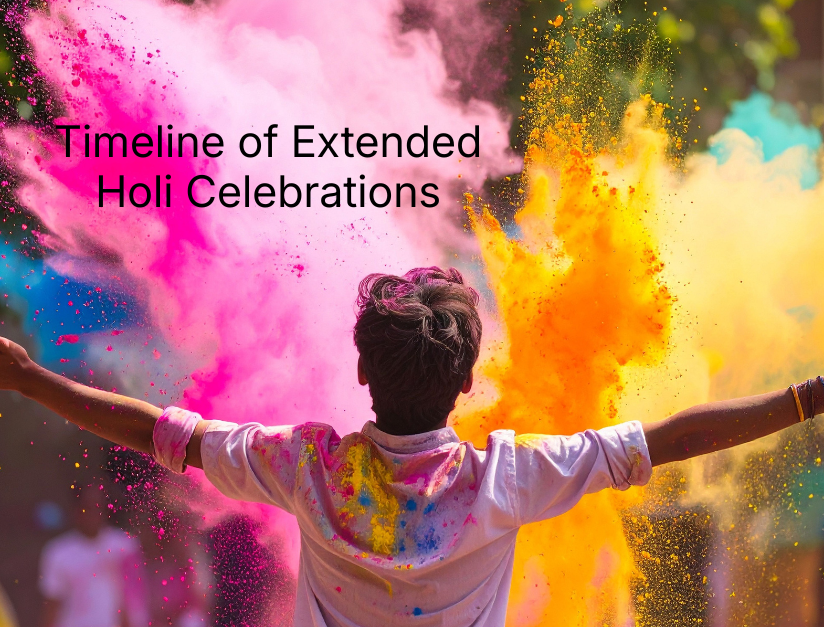
Timeline of Extended Holi Celebrations (What Happens When)
1) Early Holi Celebrations (Weeks Before Main Holi)
Holi festivities begin quietly in temples with devotional songs, colors, and flowers.
Key experiences:
- Temple bhajans and kirtans
- Light colors and gulal inside temples
- Devotional atmosphere rather than crowds
This phase is ideal for travelers who want a peaceful, spiritual Holi experience.
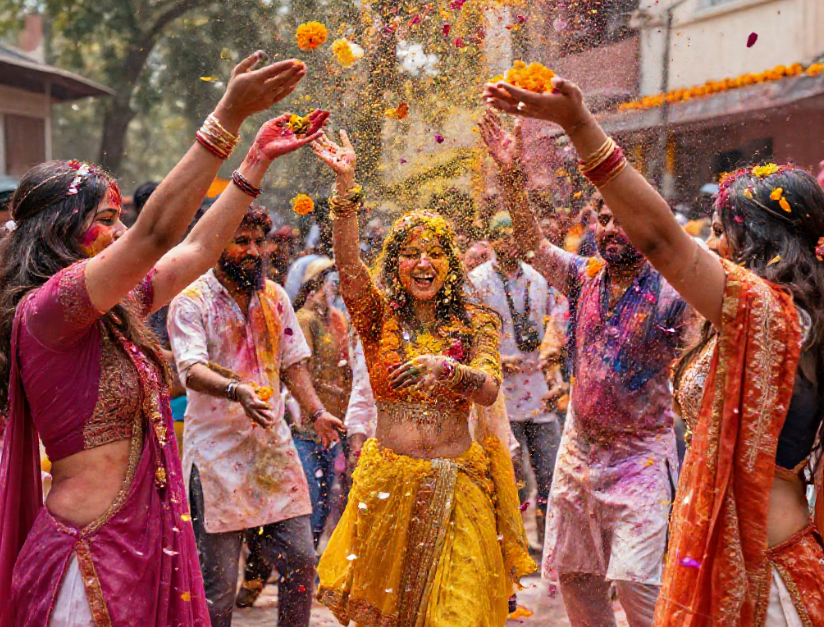
2) Phoolon ki Holi (Flower Holi)
One of the most beautiful Holi events, celebrated mainly in Vrindavan temples.
What makes it special:
- Flowers replace colors
- Short, symbolic celebration
- Deeply devotional and visually stunning
This event is especially popular at temples linked to Lord Krishna and Radha.
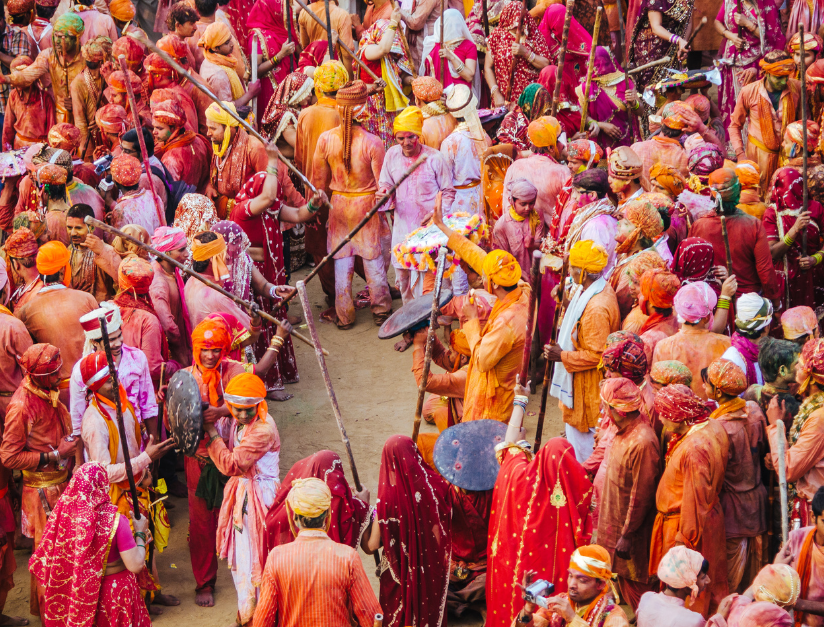
3) Lathmar Holi (Barsana & Nandgaon)
This is the most famous and unique Holi event of the region.
What happens:
- Women playfully chase men with sticks (lathis)
- Men shield themselves with traditional shields
- Based on legends of Krishna visiting Radha’s village
Lathmar Holi is celebrated days before the main Holi festival and attracts large crowds.
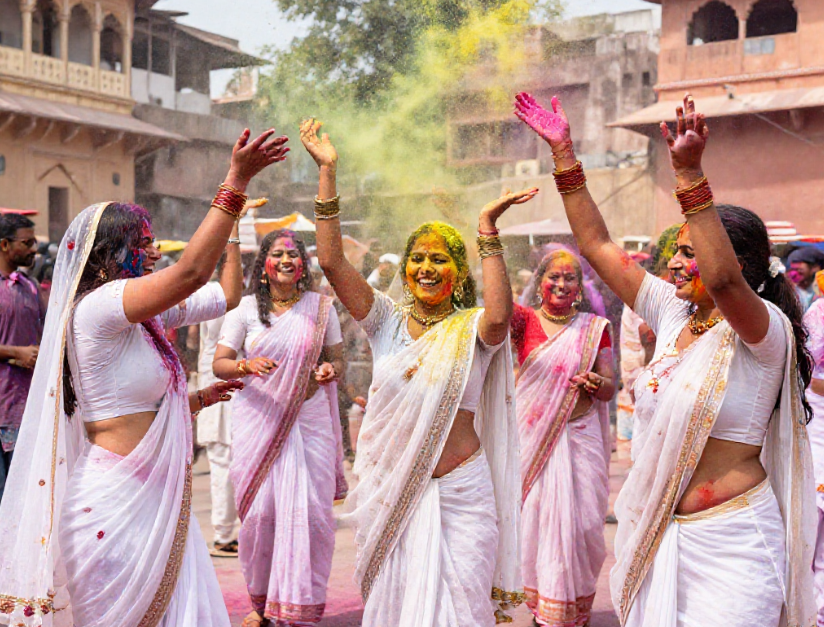
4) Widow Holi (Vrindavan)
A powerful and symbolic celebration that breaks old social barriers.
Why it matters:
- Traditionally, widows were excluded from festivals
- Today, widows participate openly with colors and joy
- It represents inclusivity and social change
This celebration has gained global attention for its emotional impact.
5) Rangbharni Ekadashi
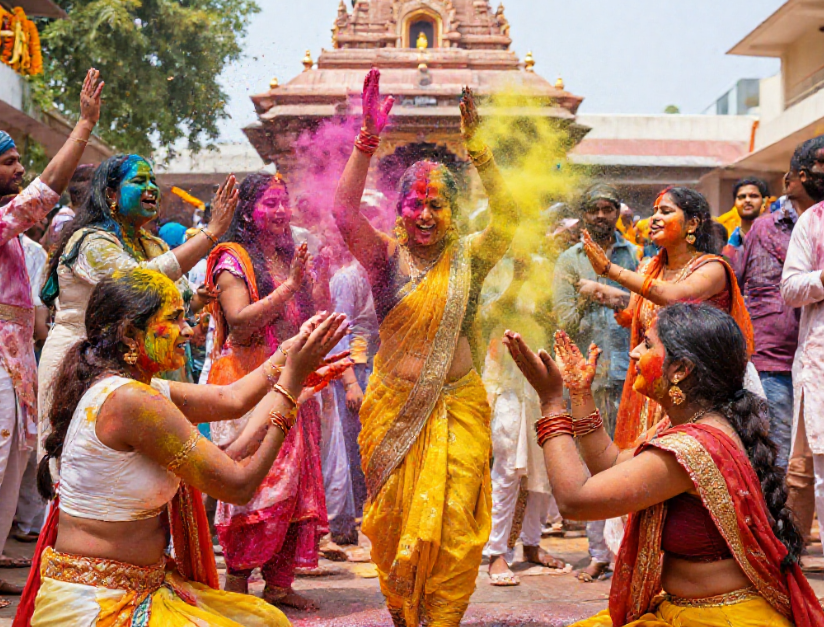
This day marks the official beginning of color-filled Holi in Vrindavan temples.
What to expect:
- Heavy use of gulal
- Energetic temple celebrations
- Large crowds and vibrant atmosphere
After this day, Holi celebrations intensify rapidly.
6) Main Holi Day (Dhulandi)
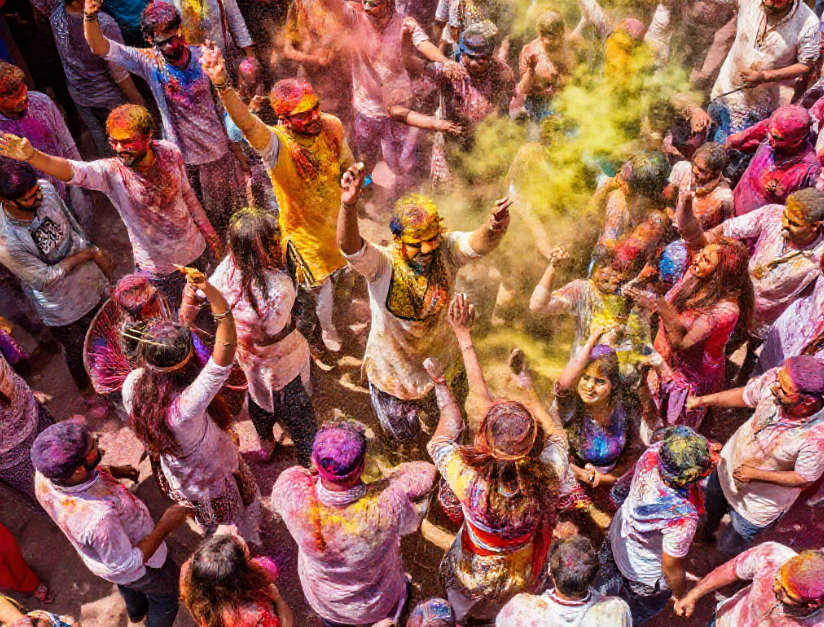
This is the day most people recognize as Holi across India.
In Mathura–Vrindavan:
- Streets are filled with colors
- Temples are extremely crowded
- Celebrations start early and continue till afternoon
This day is colorful, loud, and intense—best suited for experienced travelers or those visiting with a guide.
7) Post-Holi Celebrations (Following Days)
Even after the main Holi day, some temples continue small celebrations, temple rituals, and cultural programs.
Best Places to Experience Extended Holi Celebrations
- Vrindavan Temples – devotional and spiritual Holi
- Mathura (Krishna Janmabhoomi area) – religious significance
- Barsana – Lathmar Holi
- Nandgaon – traditional village celebrations
Each place offers a different flavor of Holi.

Best Time to Visit for Holi Tourists
Ideal time:
- 7–10 days before the main Holi day
Why?
- You can experience multiple Holi events
- Crowds are more manageable
- Easier accommodation and transport
Avoid if:
- You dislike crowds or physical color play
- You’re traveling with very young children or elderly people (main Holi day)
Is Mathura–Vrindavan Holi Safe for Tourists?
Yes, with proper planning.
Safety tips:
- Visit temples during daytime
- Avoid isolated lanes
- Wear simple, covered clothing
- Use trusted transport or guided tours
- Protect cameras and phones
- Follow local instructions inside temples
For first-time visitors, a guided Holi tour is highly recommended.
What to Wear During Holi in Mathura–Vrindavan
- White or light-colored clothes (expect stains)
- Full-sleeve cotton shirts
- Scarf or dupatta for head protection
- Comfortable footwear
- Avoid expensive clothing or accessories
Should You Plan a Holi Tour in Mathura–Vrindavan?
If you want to experience:
- Traditional Holi customs
- Devotional celebrations
- Cultural depth beyond regular tourism
Then yes—Mathura–Vrindavan during Holi offers one of India’s most unique festival experiences.
Final Thoughts
Holi in Mathura and Vrindavan is not a single-day festival—it is an extended cultural and spiritual season spread across weeks. Each event, from Phoolon ki Holi to Lathmar Holi, adds a new layer to the celebration. Whether you seek devotion, culture, photography, or festive energy, this region offers a Holi experience found nowhere else in the world.
Yes. Holi in Mathura and Vrindavan is an extended celebration spread over several weeks, with different temples and villages celebrating on different days before the main Holi festival.
Not exactly. There is no fixed 40-day rule, but Holi celebrations begin weeks in advance, which is why people popularly describe it as a long Holi season.
Holi-related events usually begin weeks before the main Holi day, starting with temple rituals and early celebrations like Phoolon ki Holi and special temple events.
Major events include:
Phoolon ki Holi
Lathmar Holi (Barsana & Nandgaon)
Widow Holi
Rangbharni Ekadashi
Main Holi Day (Dhulandi)
The best time is 7–10 days before the main Holi day, as you can experience multiple events with manageable crowds and better safety.
Yes, it is generally safe if you:
Visit during daytime
Stay in crowded, well-known areas
Avoid isolated streets
Follow local guidelines
First-time visitors should consider guided Holi tours.
For first-time visitors, Phoolon ki Holi, ISKCON Holi, and Prem Mandir celebrations are more organized and less chaotic than main Holi day.
Wear old, comfortable clothes, preferably full-sleeve cotton outfits, a scarf or dupatta, and avoid valuables or expensive accessories.
Lathmar Holi is culturally unique but very crowded. Families with children or senior citizens should observe from safe areas or attend with a guided group.
During Holi season, it’s possible but rushed. A one-night stay is recommended to experience events comfortably without travel pressure.
Book Your Mathura–Vrindavan Tour & Experience the Colors of Holi